
TRANSLATING ANTIPASTO
Alright, so there was arguably a lot of other languages spoken in Hannibal's Season 3 premiere. Even if you're a fan of the show, you're probably wondering: what in the world was Mads saying in Italian?! It's already hard at times to understand his English.
As a bit of a foreword, the title of the episode - Antipasto - is a continuation of the show's trend to name episodes after a culture's cuisine. In this case, "Antipasto" is Italian for "Appetizer." Which is exactly what this episode is!
1. In case you didn't entirely catch the first bit of non-English spoken, "Bonsoir" is French for "Good Evening." This is used several times throughout the opening minutes of the show to seem polite, yet also threatening.

Hannibal says "Bonsoir" to Dr. Roman Fell just before he presumably murders/eats him, and then again to Dr. Fell's wife. So while "Bonsoir" literally means "Good Evening," the show uses it as a threatening "You die now."
2. When Professor Sogliato confronts Hannibal after his waltz he says: "You've examined him in medieval Italian and I will not deny his language is...admirable...for a straniero."
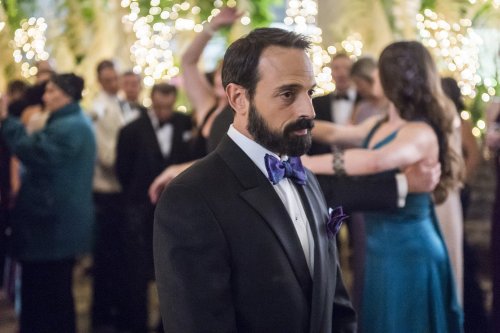
"Straniero" means just what you probably think it means: "Stranger." It's very obvious that Sogliato doesn't like that Hannibal has been appointed to this new position because he is foreign. He is not Italian. This is semi-typical given the snobbery and structure of the Italian university system.
3. In the same scene, Hannibal wins over the approval of his audience when he bursts into Italian.
"Allegro mi sembrava Amor tenendo Meo core in mano, e ne le braccia avea Madonna involta in un drappo dormendo. Poi la svegliava, a d’esto core ardendo Lei paventosa umilmente pascea Appreso gir lo ne vedea piangendo."
Which he explains is Dante's first sonnet from La Vita Nuova.

A translated version of the sonnet is:
The first three hours of night were almost spent The time that every star shines down on us When Love appeared to me so suddenly That I still shudder at the memory. Joyous Love seemed to me, the while he held My heart within his hands, and in his arms My lady lay asleep wrapped in a veil. He woke her then and trembling and obedient She ate that burning heart out of his hand; Weeping I saw him then depart from me.
4. Then Sogliato pretentiously responds: "If he's such an expert on Dante, let him lecture on Dante, to the Studiolo. Let him face them. Extempore."

"Studiolo" means a "small study" (of people, in this context) in Italian.
"Extempore" means "spontaneously" or "impromptu" in Italian.
5. Vera Dal 1926 is a fine foods store that Bedelia tends to visit throughout Antipasto. Each time she says the same thing: "Due bottiglie di Bâtard-Montrachet e li tartufi bianchi, per favore."

The name of the store - "Vera Dal 1926" - means "Real Since 1926."
What she orders translates to: "Two bottles of Bâtard-Montrachet (a wine) and white truffles, please."
The rest of the non-English language present in the episode is fairly self-explanatory. Hannibal teaches on some Italian phrases, but then he translates them almost immediately into English.
If you haven't checked out our ANNOTATIONS FOR ANTIPASTO, go check those out and tune in to Hannibal every Thursday night at 10/9c. Then you should totally check back here for more ANNOTATIONS.
